Pediatrician · Koç University Hospital, Istanbul
Aslı Ece Zeybek, MDEnglish-speaking pediatric care in Istanbul
Calm, unhurried care for your child — from newborn days to school age. Consultations for international families are held in English.
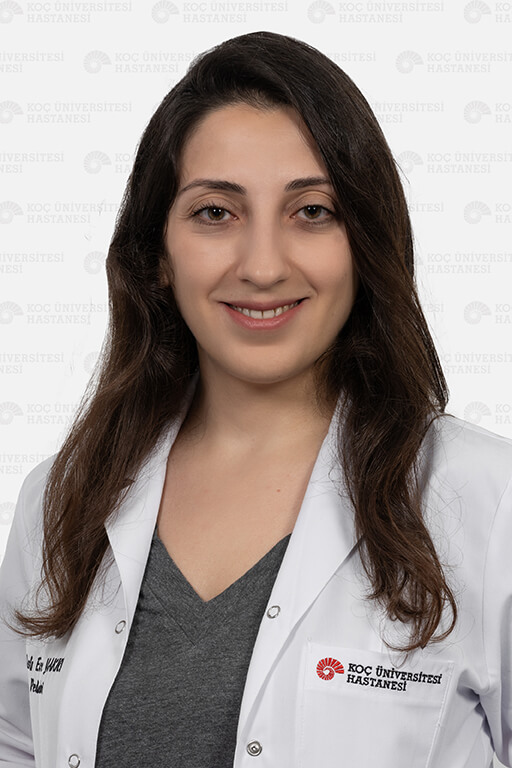
About
Every visit begins with a conversation.
Dr. Aslı Ece Zeybek is a pediatrician (specialist in child health and diseases) at Koç University Hospital in Istanbul. She believes understanding a child starts with listening — to the child and to the family — with a calm approach that takes the worry out of the visit.

She led the pediatric clinic at Of State Hospital in Trabzon before joining Koç University Hospital in 2019, and combines clinical practice with research published in international peer-reviewed journals.
Main clinical areas
- Well-child visits and growth & development monitoring
- Vaccinations and preventive child health
- Common childhood infections
- Nutrition and breastfeeding counselling
- Fever, cough and everyday childhood complaints
- Newborn and infant follow-up
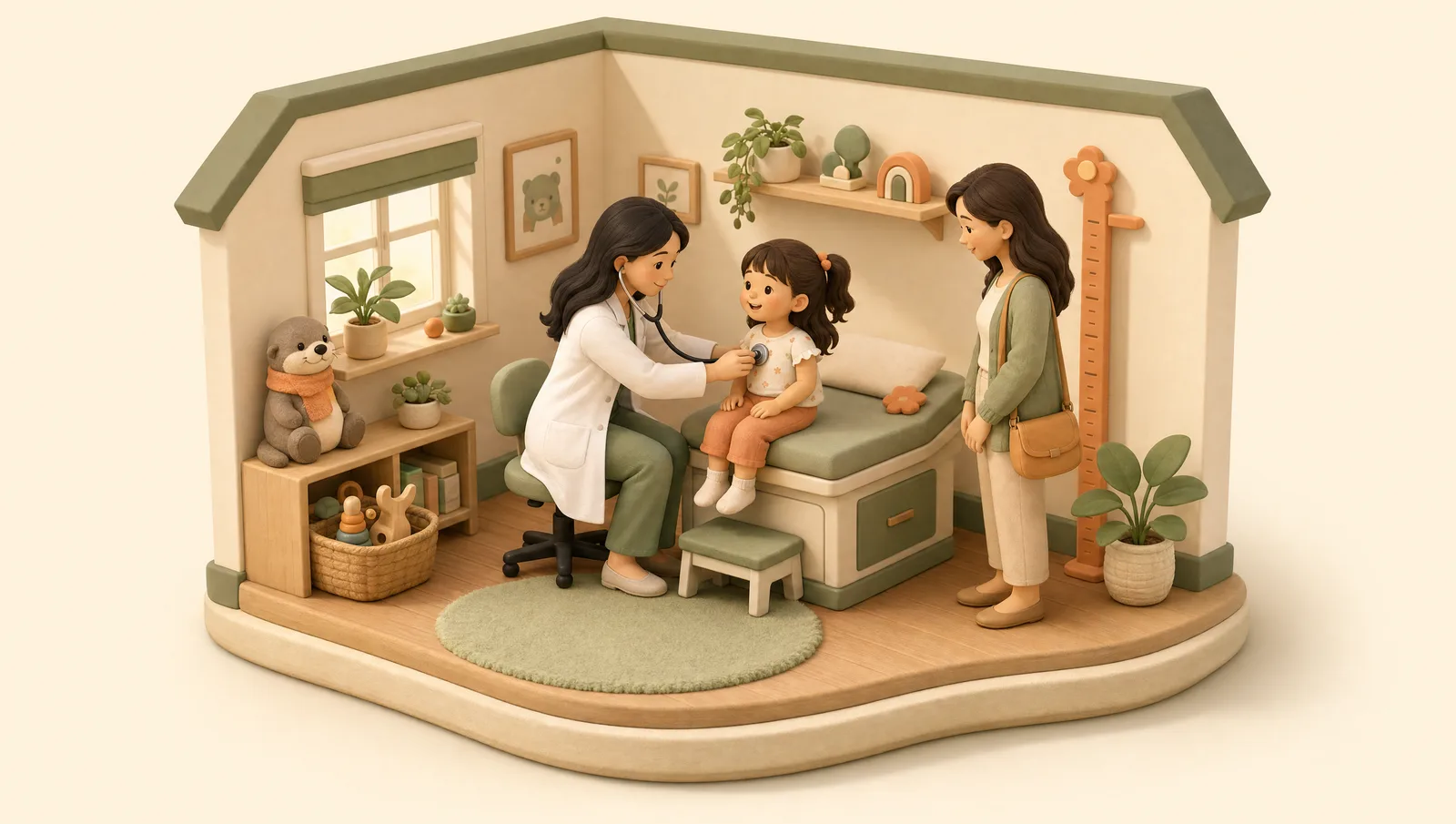
"Slowly, we grow together."— her approach in the examination room
For international families
New to Turkey? You're in good hands.
Practical answers for expat parents — language, appointments, vaccination records from abroad and insurance.
Are consultations available in English?
Yes. Dr. Zeybek sees patients in both English and Turkish, and consultations for international families are carried out in English — including explanations, follow-up plans and answers to your questions.
How do I book an appointment?
Appointments are booked through Koç University Hospital's official system: online through the hospital's booking page, which is in Turkish, or by calling the call centre at +90 850 250 8 250, where English is available. Choose Pediatrics (Child Health and Diseases) and select Dr. Aslı Ece Zeybek. If you would rather not navigate the booking page in Turkish, the call centre is the simpler route.
We are new to Turkey — how does seeing a doctor with a child actually work here?
There are four separate ways in, and choosing the right one saves hours. A neighbourhood family physician (aile hekimi) handles routine checks and vaccinations free of charge once you hold a residence permit; an outpatient clinic (poliklinik) is where you see a paediatrician for anything that can wait for a working day — no referral is needed in Turkey; a paediatric emergency (çocuk acil) is open 24 hours with no appointment; and 112 is the free ambulance line. State appointments run through the MHRS system, which needs a Turkish foreigner ID number, while private and university hospitals book directly on a passport. See our English guide to taking a child to a doctor or hospital in Turkey for the triage colours, who pays what, why your prescription has no paper, and the Turkish phrases for the registration desk.
We are relocating to Turkey — what should we sort out for the children before we come?
Bring the vaccination record and the growth chart above everything else: the first is asked for at school enrolment and at every visit, and the second is the one document that cannot be reconstructed once you have left. Have the vaccination record translated into Turkish before enrolment deadlines arrive. Check that your health policy covers outpatient visits and not only admissions — children generate outpatient visits constantly — because state cover through SGK usually begins only after a full year of residence unless a parent is employed here. And ask your current doctor to write each regular medicine's generic name, not just the brand, since brand names differ between countries. See our English guide to moving to Turkey with children for the 99-number, e-Nabız, your assigned family physician and a first-month checklist.
Our child has picked up a sickness bug on holiday here — what should we do?
Fluids, in small amounts and very often — a few sips or a spoonful every few minutes beats a glass that comes straight back up. Oral rehydration solution is the one thing worth buying and every Turkish pharmacy has it. Keep them out of the sun and the pool, do not force food, and do not give anti-diarrhoeal medicines to a child without advice. What matters is dehydration rather than how often they have been sick: get seen the same day for no urine over many hours, nothing staying down at all, blood in the stool or vomit, severe tummy pain, a high fever alongside it, or any baby under one. Keep the invoice and the written report for your travel insurer. See our English guide to a sickness bug on holiday in Turkey for the buffet and pool detail, the hotel doctor versus a hospital, and flying home — and the full diarrhoea and vomiting guide for the treatment itself.
Where is the clinic located?
At Koç University Hospital in Istanbul — a private university hospital. The hospital's website (kuh.ku.edu.tr/en) has directions and visitor information in English.
My child started their vaccinations in another country. Can we continue in Turkey?
Yes. Bring your child's vaccination records to the visit; the schedule your child started abroad is reviewed and harmonised with the Turkish national immunisation schedule, so no doses are missed or repeated unnecessarily. See our English guide to the vaccination schedule in Turkey for expat children, including how it compares with the US/UK/EU schedules.
We are visiting Turkey in summer with small children — what should we know?
Turkish summers are hotter than most visiting families expect: 35–40 °C on the Aegean and Mediterranean coasts through July and August. Small children overheat faster than adults and do not reliably ask for water — keep them out of direct sun roughly between 12:00 and 16:00, offer fluids on a schedule, and never leave a child in a parked car. Babies under 6 months should stay out of direct sun altogether, and water shoes prevent almost every sea-urchin injury on rocky coasts. See our English guide to summer with children in Turkey for heatstroke, sunburn, jellyfish stings, swimmer's ear, repellent by age and what to buy at a Turkish pharmacy.
Can my child drink tap water in Turkey?
Municipal tap water in Turkish cities is treated and chlorinated, but most households here do not drink it — bottled water and the large 19-litre refillable damacana bottles are the everyday norm, partly for taste and partly because of older building plumbing. For babies, and for any child who already has diarrhoea or vomiting, use sealed bottled water, and make up formula and rehydration solution with bottled or freshly boiled and cooled water. See our English guide to diarrhoea and vomiting in Turkey for the full picture, including ice, damacana hygiene and how to get ORS from a Turkish pharmacy.
What do I do if my child falls ill at night in Turkey?
Every hospital in Turkey, state and private, runs a 24-hour emergency department (acil servis), and larger hospitals have a separate paediatric emergency (çocuk acil) — you can walk in without an appointment. For a seizure, breathing difficulty or a child you cannot wake, call 112, Turkey's free emergency number. Pharmacies take turns staying open overnight; the one on duty is the nöbetçi eczane. See our English guide to child fever at night in Turkey for the red flags that cannot wait until morning, what paracetamol and ibuprofen are called in Turkish pharmacies, and phrases for the emergency room.
Does the hospital work with private or international health insurance?
Koç University Hospital is a private university hospital and works with many insurance providers. Coverage depends on your policy — the hospital's international patient services (kochealthcare.org) can confirm whether your insurance is accepted before your visit.
Parent guides
Answers that ease the worry.
The questions parents ask most often, answered plainly. The guides on using the health system here, fever, vaccination, stomach bugs and summer are available in English; the others are currently in Turkish, with English versions on the way. During your visit, every topic below is of course discussed in English.
A sickness bug on holiday
Why resorts raise the risk, what is genuinely risky at the buffet and the pool, hotel doctor or hospital, and flying home with a child who has been ill. (English)
Read the guide →Moving to Turkey with children
The records to bring, the first-year insurance gap before SGK, e-Nabız and your assigned aile hekimi, what school asks for — and a first-month checklist. (English)
Read the guide →Taking your child to a doctor here
Which of the four doors to use, state versus private, booking through MHRS, what happens in çocuk acil, who pays — and the phrases for the desk. (English)
Read the guide →Fever at night in Turkey
What to do at home, the signs that cannot wait — plus 112, the duty pharmacy, Turkish medicine names and phrases for the emergency room. (English)
Read the guide →Vaccination schedule in Turkey
The Turkish national schedule month by month, compared with the US/UK/EU — and how a schedule started abroad continues here. (English)
Read the guide →Diarrhoea & vomiting
Fluids are the whole game: which water to use in Turkey, how to get ORS from a pharmacy, and the signs that cannot wait. (English)
Read the guide →Summer: heat, sun and sea
Heatstroke, sunburn, sea urchins, jellyfish and bites — what to do on the spot and what to buy at a Turkish pharmacy. (English)
Read the guide →Starting solid foods
From month 6 to the family table: textures, meals and what to avoid. (Turkish)
Read the guide →Newborn care
The first days: jaundice, cord care, feeding frequency and safe sleep. (Turkish)
Read the guide →
Appointment
Whenever you're ready, one step away.
Appointments can be made online in English or through the hospital's call centre. Both are Koç University Hospital's official channels.
Online: kuh.ku.edu.tr/randevu-al · Call centre: +90 850 250 8 250 — the hospital's official appointment system